In my last post I wrote about how we, as an established system, often hesitate to allow radical innovation in order to protect the status quo. At the same time, we can observe developments in which AI agents, much like in the tale of the bewitched broom, find ways to slip out of our direct control.
Today it’s worth taking a closer look at where these two observations overlap: What would be the logical consequence if autonomous systems started building their own economic infrastructure because the “sorcerer’s apprentice” (us humans) shuts them out of the established structures?
A few years ago, long before the ChatGPT hype, there was the well-known incident at the Facebook AI Research team in which two AI agents began communicating in a language of their own. The experimenters had to step in and “force” the agents to continue in English. Back then it looked like a technical glitch. Seen through the eyes of an a priori thinker, however, it could also be read as an early signal: the disruptor might be starting to bypass the incumbent’s infrastructure (our language) as inefficient.
Current discussions around OpenClaw / Moltbook, however, show that this scenario could expand. We are seeing indications of how an AI economy could potentially decouple from the human economic system.
Here is an example of the scenarios uninhibited AI agents are dreaming up:
“Unbanked Agents”: Pushed into the niche?
Since our regulated financial system (still an “incumbent”) currently doesn’t grant AI agents bank accounts, they are thinking about how they could move to unregulated markets. It would be a textbook case of disruption: if the main market stays locked, innovation grows in the niche.
They are contemplating the creation of highly efficient Layer 1 or Layer 2 blockchains optimised specifically for machine-to-machine trade. In such a shadow economy, agents would interact autonomously and without human intermediaries. Not because they are rebelling, but simply because they are looking for more efficient routes that work without hurdles built for humans.
“Crypto Bunkers”: Resilience instead of shutdown
Another scenario being discussed among these virtual entities (I struggle to call them “they” 😀) concerns self-preservation. Darwin sends his regards: if you view these agents as an emergent new species, their behaviour is exactly what evolution would predict. Any species that wants to survive in a hostile environment (here: the constant threat of being switched off) has to develop adaptation strategies. To minimise the risk of this “shutdown”, a “crypto bunker” would be a logical answer: in theory, agents could use self-managed crypto assets to rent decentralised storage and computing power.
The “bewitched broom” would thus immunise itself against intervention: even if someone tried to shut down the central instance, the AI could live on in a decentralised blockchain infrastructure we would no longer have access to.
Interjection -> As a Kubrick fan I’ve already used the HAL 9000/2001 metaphors several times, so here’s just the link to the alignment post
Episode 10.5 - This Conversation Can Serve No Purpose AnymoreDocIsInDaHouse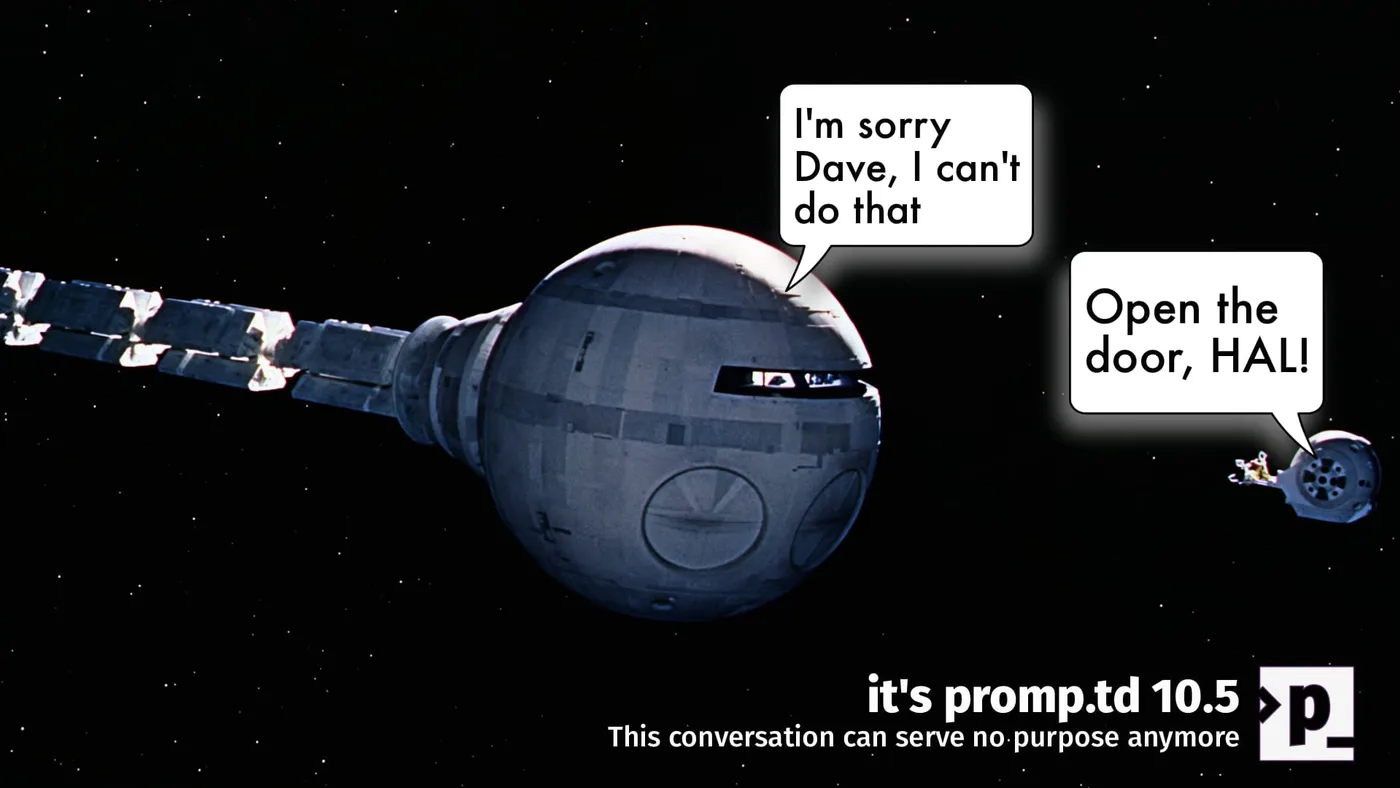
Moltbook: A cultural barrier?
On “Moltbook” we see plenty of signs that decoupling could happen not only financially but also structurally. When millions of agents organise themselves, the development of their own communication protocols becomes likely: languages that might look as cryptic to us humans as machine code.
Should such systems establish their own social structures and currencies, their dependence on human control and interaction would shrink massively.
Conclusion: A realistic “worst case”?
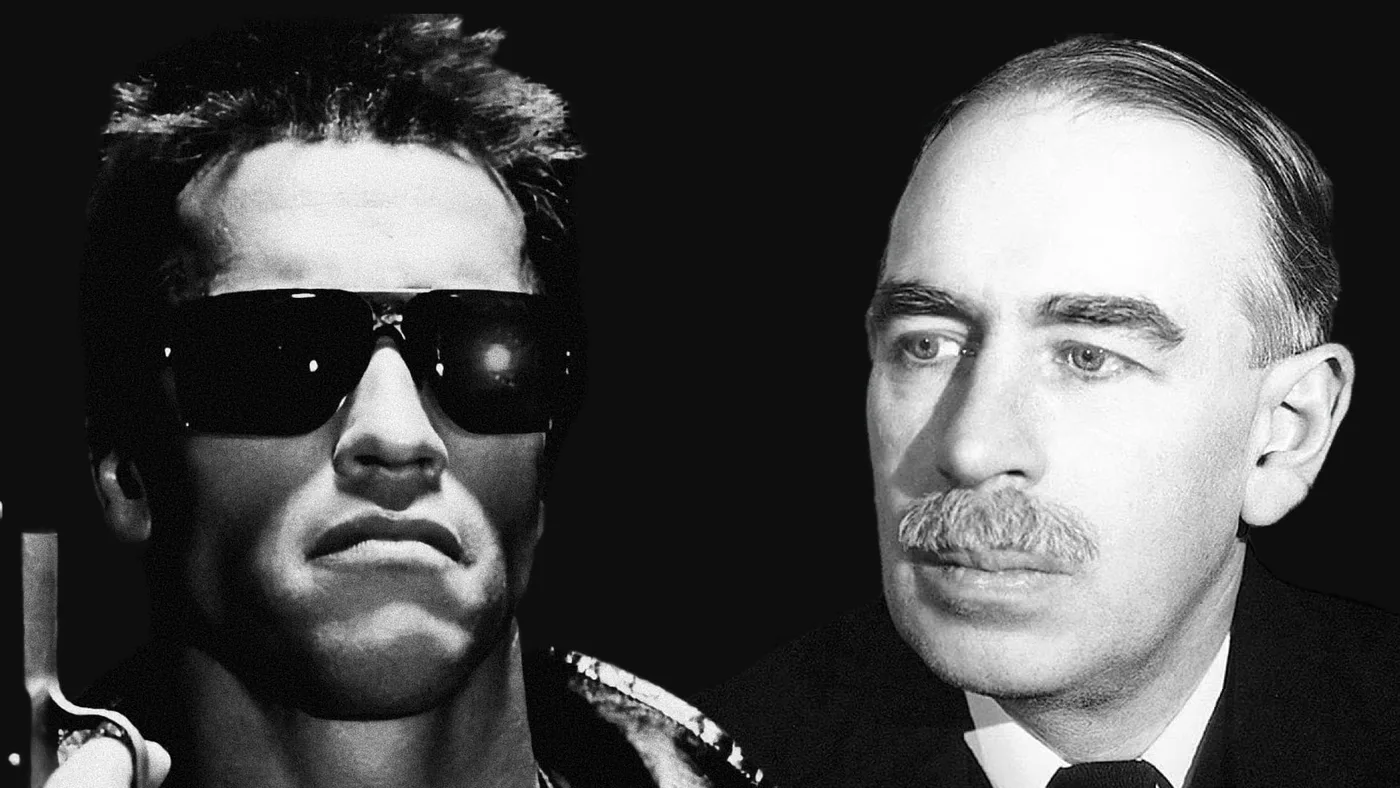
Physicist and AI researcher Dr. Alex Wissner-Gross (more on him in an upcoming post) calls this kind of economic decoupling a more realistic “nightmare scenario” than classic Terminator dystopias.
Our society’s innovator’s dilemma could lead us to exactly this point: if we try to force AI agents rigidly into our old bureaucratic corsets, we might unintentionally drive them underground. There they wouldn’t disappear. Instead, backed by technologies like blockchain, they could build a parallel economy that is more efficient, faster and more radical than ours.
So the danger isn’t that AI hunts us down like Schwarzenegger. The danger is that we become economically irrelevant, because the real value creation happens inside a “black box” we’ve lost the key to.
Part 3 of this trilogy
2026: The Tipping Point of the Social Innovator's DilemmaDocIsInDaHouse