The digital citizen’s manifesto - getting rid of "Final_v2_EDITED-FINAL.docx"

Human society has always evolved through a single, relentless mechanism: the creation, implementation and sharing of knowledge. From the printing press to the dawn of the internet, our collective progress is measured by how effectively we pass ideas to one another and build upon them.
Knowledge is power (Peter Drucker was right)
Back in 1959, long before laptops or LLMs, the forefather of all management consultants, Peter Drucker, recognized this profound shift in the business world. He identified a new social figure: the Knowledge Worker. For Drucker, the future of work would not be defined by muscle power or mechanical routine, but by the ability to deal productively with data, information and knowledge to make valuable decisions.
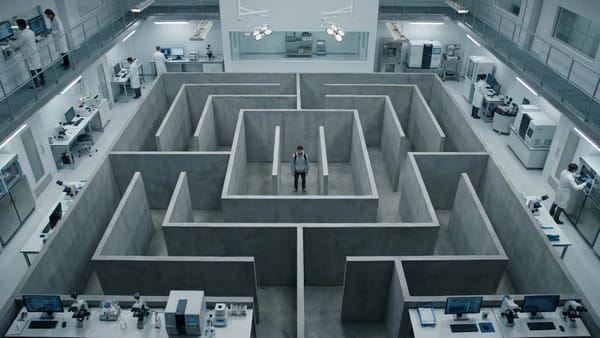
Yet, after twenty years of witnessing corporate "modernization" initiatives, I’ve observed a structural irony. While we claim to be more connected than ever, the modern knowledge worker is paralyzed by subpar tools. We are drowning in "sophisticated" app suites that promise seamlessness but deliver only data silos and administrative friction. While VPs of Operations hemorrhage billable hours wrestling with indentations in proprietary editors, the world’s most effective engineers are already building the future in plain text.
The modern workforce has mistaken being a Digital Consumer, a passive subject of a SaaS vendor’s ecosystem, for being tech-savvy. To survive the next era of digital evolution, we must transition to being Digital Citizens. A citizen doesn't just rent space in an app; he claims ownership of the foundation upon which his work is built.
Stop being a subject, start being a citizen
The distinction between a passive subject and an active citizen can be defined by a single word: Agency.
In the world of digital transformation, agency is the most overlooked KPI. It is ignored because it doesn't come with a shiny dashboard provided by a vendor; it is the fundamental power to move your data and your knowledge without seeking permission.
A true Digital Citizen is not merely a user of apps, obeying the constraints of a user interface. To be a Digital Citizen is to be an active participant who claims sovereignty over their data, contributes to the collective pool of knowledge, and refuses to be confined by the walls of proprietary software.
If your knowledge is locked inside a tool that expires when a subscription ends, you aren't an innovator, you are a subject living in a digital kingdom you do not rule. Agency is the refusal to be governed by a Terms of Service agreement and the commitment to be a free participant in an open digital society.
Markdown: The longevity of "plain" thought
Markdown is a strategic antidote to the walled gardens of traditional "knowledge Management". It is the gold standard for portable text because it is "just text." It is the native language of the modern web, functioning on every computer on earth without the need for bloated software.
- Native Web Language: The platforms where the world’s most influential minds share concept, like Ghost, Substack or Medium, all run on Markdown under the hood (even if they try to lock the doors once your content is inside)
- Strategic Simplicity: Because it is machine-readable and software-agnostic, Markdown ensures your intellectual work doesn't "break" when a vendor changes their UI or goes bankrupt.
There is a dry irony in the corporate world: middle management spends their lives dealing with complex editing and formatting menus, while the architects of the future use simple text to build systems that will outlast us all.
Git: Curing the "Final_final_v2" disease
Traditional collaboration is a disaster of miscommunication and accidental overwrites. We have all seen the graveyard of file versions that signal the death of a project’s integrity:
Project_Final_v2_EDITed_FINAL.docx
This naming convention is a symptom of a failed workflow. Git provides "Collaboration Without Chaos" by acting as a high-fidelity Time Machine. It tracks changes line-by-line, creating a complete history of thought.
However, the crown jewel of digital agency is The Freedom to Fork. This is the toolkit's most powerful feature. It allows anyone to take a public idea and "fork" it, building a new version on top of the original foundation without breaking the source. This transforms static, dead documents into living, evolving projects. Through Pull Requests, Git contributes to a "Democracy of Ideas," allowing a concept to grow far beyond the vision of its original creator through collective contribution.
The AI multiplier: Open standards are "healthier" AI food
Proprietary formats are structurally obese. A standard office document carries a massive payload of invisible formatting code that forces AI models to burn through their context windows on layout rather than logic. This 'token bloat' drives up computational costs and slows down processing. Markdown, by contrast, is a lot more efficient, it lets the AI focus 100% of its power on the content, not the container.
Markdown and Git are the "perfect healthy food" for Artificial Intelligence because they provide two things a chatbot lacks: Structure and Context. Markdown provides the machine-readable structure, while Git provides the history—the "why" behind every change. This enables high-fidelity AI-Enhanced Workflows:
- Automated Agent Reviews: AI agents can review Pull Requests, offering copy-edits and structural improvements before a human ever touches the file.
- Consistency Checks: AI can scan vast Markdown repositories to ensure messaging and technical standards remain coherent across the entire organization.
- Knowledge Retrieval: AI-powered search tools thrive on structured text, making information retrieval instantaneous rather than a scavenger hunt through nested folders.
If we force AI agents to wade through the same proprietary bloat that paralyzes the human workforce, we aren't innovating, we are just building faster bureaucrats. Consider the economics of the file format itself: computational AI costs are driven by token consumption.
The Markdown source file for this very article is a lean 8kb. The same content in .docx is 20kb, and in PDF, it balloons to 79kb.
That proprietary overhead isn't just invisible garbage, it is also a direct cost driver. A truly intelligent workflow doesn't just automate the mess, it cleans it up first.
The superpower of the combination
The strategic imperative is not found in a single tool, but in the stack. When you combine Markdown (portable ideas) with Git (structured collaboration/history) and layer AI on top, you unlock an operational superpower.
This combination is an Operational Imperative for any organization seeking to eliminate Vendor Lock-in. By adopting these open-source standards, you reduce operational costs and increase efficiency by allowing your team to speak the same language as a global community of scientists, thinkers, and developers.
The gentle learning curve
The transition from Digital Subject to Digital Citizen does not require a computer science degree. The learning curve is surprisingly gentle, yet the impact on your intellectual legacy can be profound. These are concepts simple enough to be taught in elementary school, yet powerful enough to run the world's largest software companies.
We are at a crossroads where it is becoming easy to cross the boundaries of proprietary limitations and free our work. The tools are here. I have been using them for years now, having purged my workflow of the "enshittified" bloatware that the tools from MS/Adobe&Co has become.
I will be publishing more about my "Digital Citizen Workplace" soon. Stay tuned.
Live long and prosper 😉🖖