Reminder: AI is not a product, it's a feature. What matters is the thoughtful integration of advanced AI capabilities into your own business processes, far more than any standalone AI product. That is the only way AI becomes a lasting, measurable competitive advantage. With regulatory requirements tightening and data protection concerns growing, the question of owning a controllable AI infrastructure is moving ever closer to centre stage. Open-source solutions play a key role here: they enable tailored, compliant and data-secure innovation, well away from short-lived hype.
There is no single perfect AI
A widespread misconception is that there is “the best AI”, one that handles every task equally well. In reality, artificial intelligence is highly specialised: a model that writes excellent prose can fall flat on technical questions. Another that generates precise code may give poor answers on creative tasks.
These differences come down to:
- Architecture and training (e.g. which data a model was trained on)
- Optimisation focus (e.g. dialogue, code, image recognition, summarisation)
- Compute requirements and speed
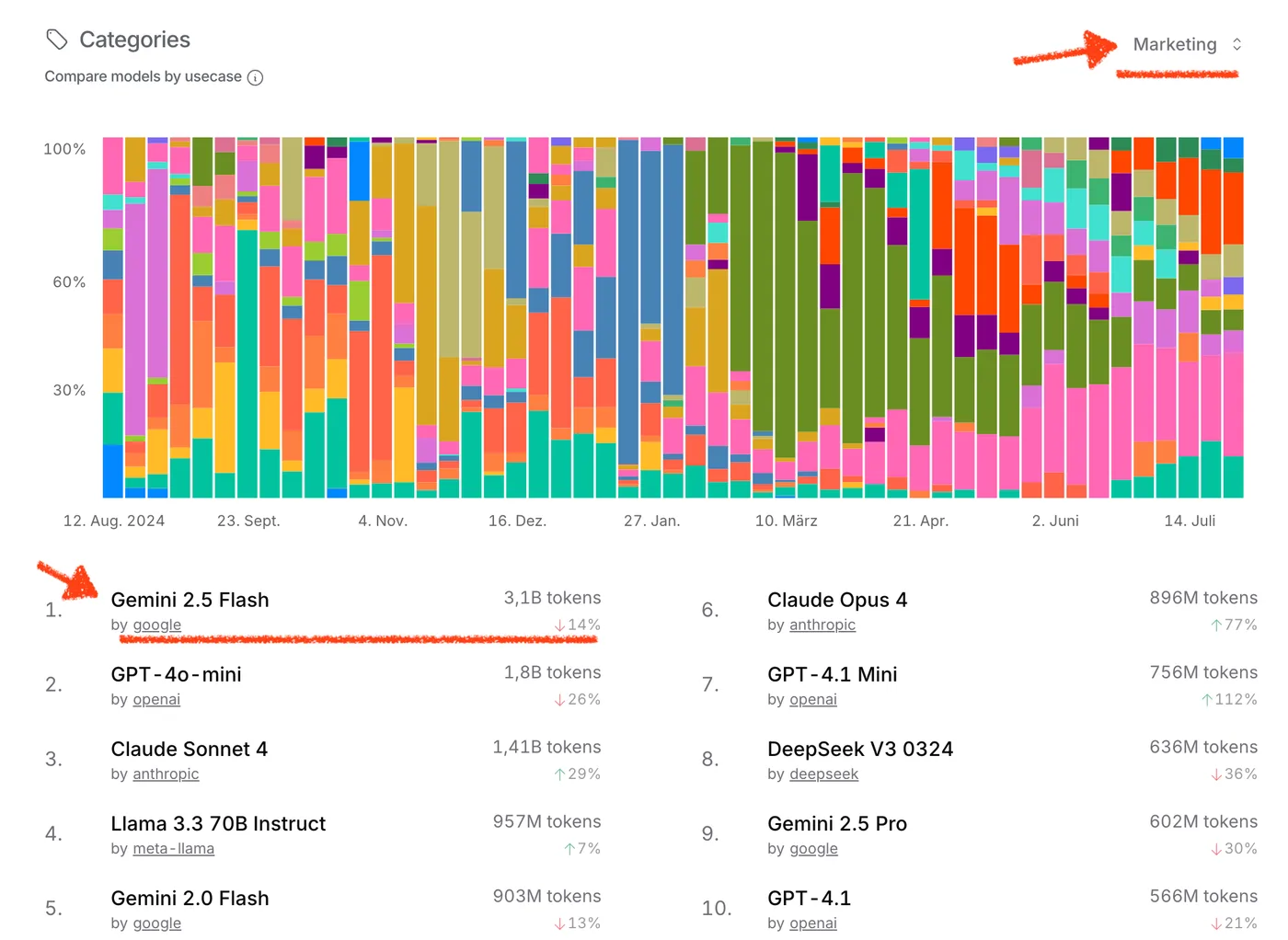
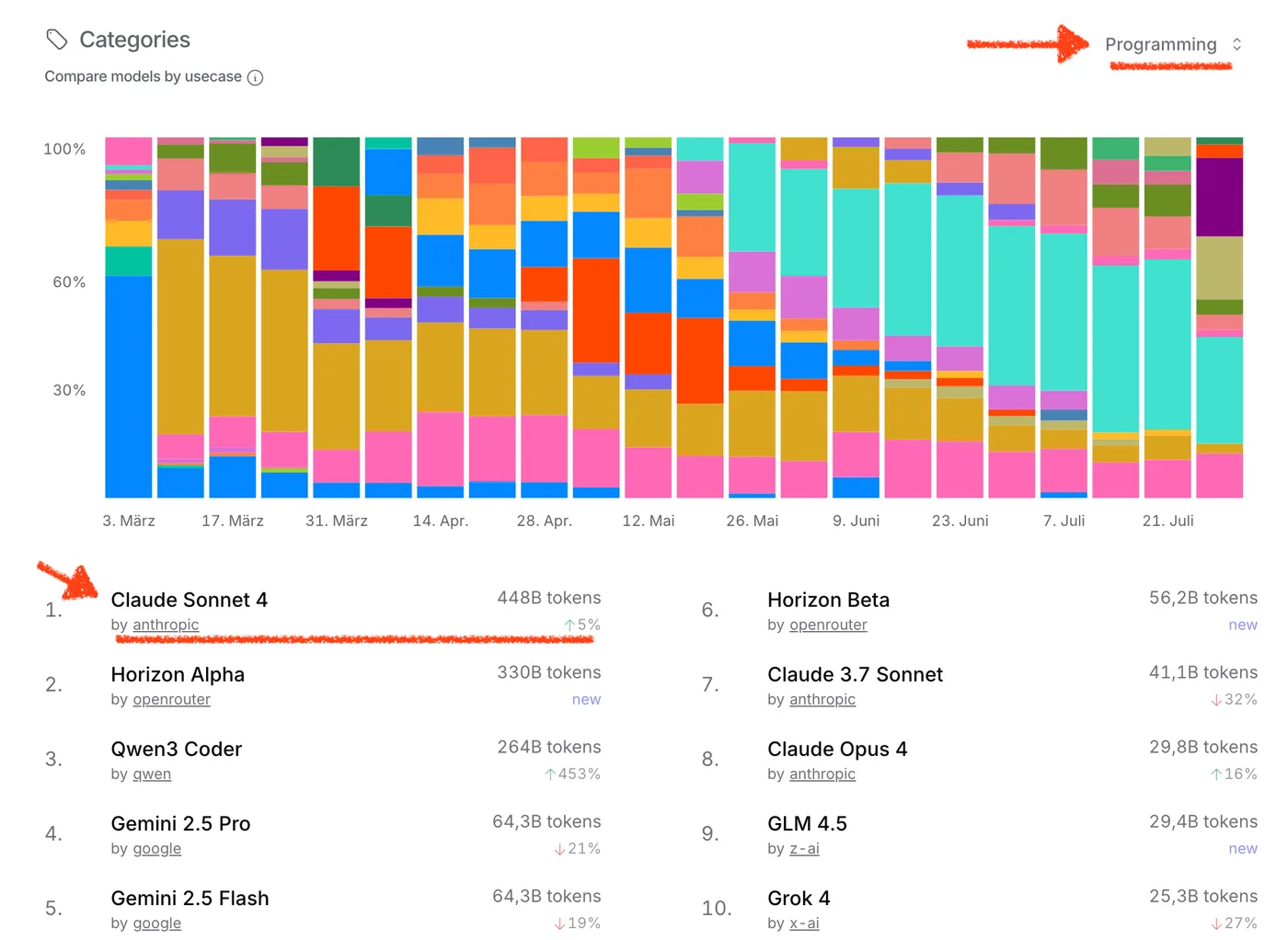
That's why choosing the right model for each use case is crucial.
Precisely because there is no one universal AI, only different models each with their own strengths, it matters all the more that companies have access to a broad selection, full transparency and the ability to customise. Here too, open-source AI offers a decisive strategic advantage: it gives you access to cutting-edge models and lets you optimise them individually, tuned to your requirements, your data and your infrastructure.
One key player in this movement is Hugging Face, one of the world's leading platforms for open-source AI.
What is Hugging Face?
Hugging Face is an open platform and community that democratises access to state-of-the-art AI technology and puts collaboration at its core. The platform offers:
- Access to more than 1.7 million freely available AI models (NLP, vision, audio, multimodal and much more), including current models such as Deepseek, Kimi K2, Qwen 3 etc.
- Public and private repositories for models, datasets, workflows and pipelines
- Evaluation and deployment tools plus extensive demos
- A global community of companies, research institutions and developers
Why does open source matter for enterprise use of AI/LLMs?
Because of regulation, but also simply through common sense when decoding the current waves of hype, building AI in-house is the right way to go at the moment.
1. Full control and security
- Models can run on-premises, in a private cloud or locally: maximum control over all sensitive data
- Compliance & governance: GDPR, the AI Act, industry-specific and internal policies can all be met
- Independence from API costs, service availability and external vendors.
2. Economics & ROI
- No licence fees and no vendor lock-in: investment flows straight into your own value creation
- Fast product development thanks to ready-to-use models, ideal for prototyping, automation and go-to-market.
- A pointer from market studies: more than 50% of companies reach a positive ROI faster with open-source AI than with closed-source alternatives
3. Maximum adaptability
- Flexible integration into your own business processes, from the knowledge base to customer support and efficient change management.
- Models can be efficiently fine-tuned for specific domains and use cases (transfer learning)
For quick testing & comparison: Groq & OpenRouter
Before tackling your own models, and to climb the learning curve that AI demands, it pays to try out every model you can get your hands on, open source or proprietary. For evaluating and selecting the best model, specialised platforms such as Groq and OpenRouter offer decisive advantages:
- Comparing a wide range of AI models (Hugging Face, Meta, Mistral, Google, OpenAI etc.) in real time, with no investment in local infrastructure
- Fast, cost-controlled tests of LLM compute performance, quality and speed, ideal for making decisions before rollout
- Access to high-performance hardware and APIs that plug easily into existing workflows.
- No long-term commitment: maximum agility in the pilot or POC phase.
Don't forget: the moment you use external LLMs, you lose data sovereignty, and careless copy/paste can quickly end in disaster. If you'd like to start by experimenting on a small scale -> Tool Quick Dive: t3.chat - The Swiss Army knife for prompting*
Hardware for open-source AI in the enterprise
Here, too, you can and should work iteratively: learn first and set up POC projects, and once you've mastered the topic, move on to scaling and deploy it company-wide.
Thanks to the broad choice of models, frameworks and powerful hardware, getting started today is far easier than it used to be:
- Many production use cases run well on workstations with multi-core CPUs and modern GPUs, and fine-tuning is possible locally or in the cloud
- A powerful and cost-effective POC and test setup: Apple Mac Studio (with M3 Ultra, up to 512 GB RAM); thanks to unified memory & native AI integration, it's ideally suited to development and inference of mid-sized models.
- What matters here are strong GPUs with lots of RAM and high memory bandwidth (which is why the Mac Studio is interesting)
For very large models/training: dedicated GPU servers (NVIDIA A100/H100) or scalable cloud solutions (AWS, Azure, GCP, Hugging Face Hub) remain the first choice for maximum scale.
Bottom line: just do it 😉
To sum up: anyone who wants to use artificial intelligence as a strategic lever while meeting regulatory and company-specific requirements will find it hard to get around self-determined integration and open-source AI.
Simply buying off-the-shelf AI products won't deliver lasting value. Deliberately embedding powerful, customisable models as a “feature” into existing processes will, from improved data sovereignty to faster innovation. The combination of your own infrastructure, open ecosystems and rigorous process optimisation is the key to unlocking the full benefit of the AI transformation.
👀 Worth reading:
- Clash of the Titans: Why Open Source AI Is Winning With Businesses – Big and Small
- McKinsey: Open source technology in the age of AI
- IBM: What is Hugging Face?
Live long and prosper 😉🖖
Off topic, but not really: if anyone's into typography, Harald Geisler took the trouble to capture Albert Einstein's handwriting as a computer font. And since these times are getting ever harder on the psyche, he did the same for Sigmund Freud's handwriting. I like to use these fonts when I have nothing clever to say (i.e. most of the time) but still want to look clever 😀