If you're wondering why OpenAI and other pure-play AI producers are currently churning out so many side products, like browsers, software development environments and so on, just recall an old Steve Jobs line: “It's a feature, not a product.” I've often boiled the AI hype down to two properties, either here in the newsletter or in talks:
- It's an IT tool that helps extract information from large, unstructured volumes of data (for structured data we already have plenty of IT tools) (btw -> since I write, blog, whatever in several languages, deepl.com helps with the translating)
- It has an easy-to-use “natural language interface” that has managed to pass the Turing test: the user interacts with the tool as if with another human being. “Ease of use” is the driving factor.
Once you put these AI tools on the same shelf as other, older IT tools, they become much easier to place: like all IT tools, they help optimise processes. No more, no less. And on closer inspection it quickly becomes clear that AI is less a standalone “product” you simply buy and deploy, and much more a “feature”: a function or capability that has to be integrated into existing processes and systems to deliver its full value.
It's the process, stupid!
To paraphrase James Carlile's famous line: this is about processes! AI's real strength doesn't lie in its existence as a standalone product. It lies in its ability to make existing processes more efficient and more intelligent. So companies should worry less about buying “AI products” and work much more on figuring out how to integrate this technology as a feature into their own workflows. I've summed up my recommendations on that in this article: Episode 10.6 - Generate or delegate?
The AI vendors have already figured this out, which is why they're now using the mountains of money they're raising to build or buy products that can map processes. Meanwhile, more and more vendors of process tools are trying to bolt on AI features. There's a pretty interesting and dynamic race underway here, and it's fuelling this never-ending hype even further.
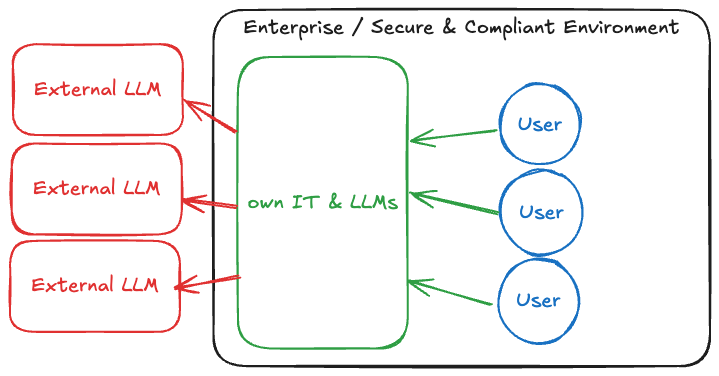
My (repeated) recommendation: given the legal requirements and the major data protection concerns, business owners should work towards their own infrastructure and evaluate whether they'd be better off setting up and running their own AI tools to keep their processes “compliant”. They get help from another development, far less hyped but just as massive and steady, one that has made many IT innovations possible for years: open source.
Setting up your own models would also be an important step towards meeting these legal requirements, delivering better-quality results and safeguarding your own data security.
🗞️ Selected News
- Elon Musk is still on quite the ego trip. The new release of his AI, Grok 4, had actually been getting praise. Then it came out that on many topics it first checks Elon Musk's opinion before answering. And that opinion should very often be taken with a large grain of salt. A shame, but this tool is now on my blacklist for the time being. Luckily there are plenty of equally good alternatives. System prompt reveals: Grok is explicitly meant to represent Elon Musk's worldview
- Why Kimi K2 is genuinely interesting (beyond being open source)
- More facts, less hype about AI Impact for software development: Measuring the Impact of Early-2025 AI on Experienced Open-Source Developer Productivity
- These (new) Romans are crazy 😉 The Epic Battle for AI Talent—With Exploding Offers, Secret Deals and Tears
🚀 New service: Book your own AI expert for free 😉
Live long and prosper 😉🖖